
Root canal in La Mesa residents have come to trust Dr. Jin Song Yom, DDS at Smile Roots Dental when tooth pain signals something serious and waiting is not an option. Severe discomfort, spreading infection, and a smile worth saving all demand expert care delivered with speed and precision. Our dental team walks you through every step of the process, making your visit as calm, clear, and comfortable as it can be. You deserve honest answers, real expertise, and a practice that puts your dental health first.
Root Canal in La Mesa
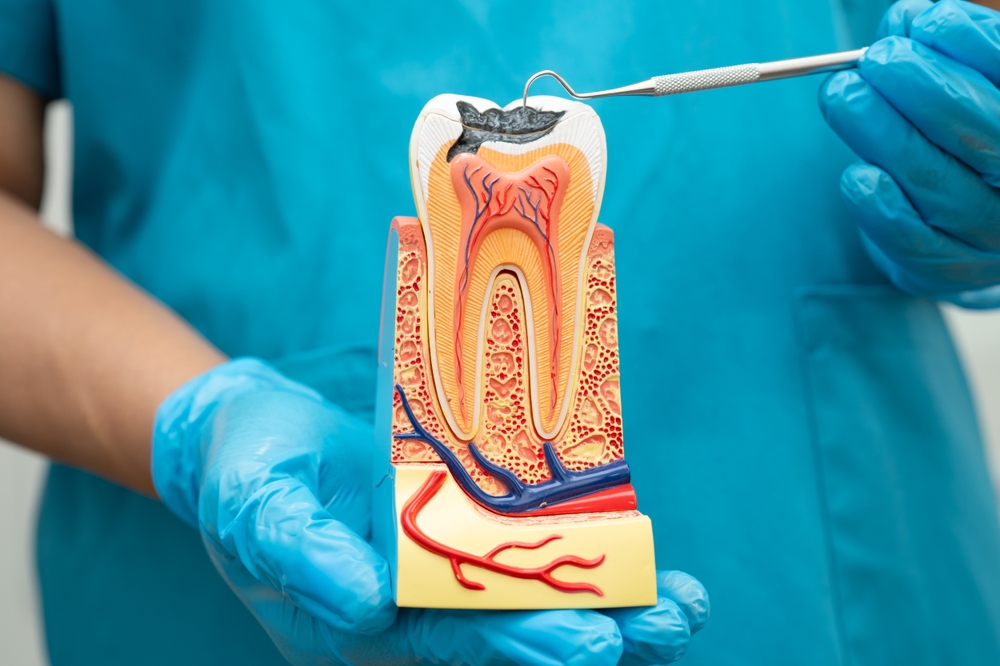
How Tooth Decay Reaches the Nerve
Tooth decay starts at the surface, but it rarely stays there. Dental caries eat through the outer enamel gradually, and if left untreated, they work their way through the dentin and into the dental pulp, the soft inner layer of the tooth that houses blood vessels, nerves, and connective tissue. Deep decay that reaches this layer introduces bacteria directly into a space that has no way to drain or clear infection on its own, which is what makes the situation escalate quickly.
Once bacteria reach the tooth pulp, inflammation sets in and pressure builds inside the tooth. Sensitivity to hot or cold temperatures is often one of the first signals, followed by more persistent tooth pain that does not go away on its own. At this stage, endodontic treatment becomes necessary to remove the infected pulp, eliminate the bacteria, and seal the tooth against further damage. A direct pulp cap may be considered in early cases where the pulp is only minimally exposed, but significant deep decay typically calls for a full root canal to protect your dental health long term.

Benefits of Root Canal Treatment
Your Adjacent Teeth Stay Where They Belong
When a damaged tooth is left untreated, neighboring teeth gradually shift toward the gap or the weakened area. This misalignment affects your bite, changes how your teeth meet when you chew, and can create new pressure points that accelerate wear. Treating the tooth early with root canal therapy keeps everything in position. Proper tooth alignment also makes dental hygiene easier and more effective over time.
No More Temperature Sensitivity Disrupting Your Day
Lingering sensitivity to hot or cold temperatures is one of the most disruptive symptoms of an infected tooth. It catches you off guard mid-meal and makes eating certain foods genuinely unpleasant. Once the compromised dental pulp is removed and the tooth is sealed, that nerve response is eliminated. Patients are often relieved to eat and drink normally again without bracing for discomfort.
The Treated Tooth Still Looks and Acts Like Your Own
After a root canal and crown placement, the restored tooth is virtually indistinguishable from the rest of your smile. It does not shift, require adhesives, or need special maintenance beyond your regular dental hygiene routine. Unlike a bridge or partial denture, there is no hardware involved, just your natural tooth, reinforced and fully functional. Restorative dentistry at this level preserves both the look and the feel of your original smile.
One Procedure Addresses the Source, Not Just the Symptoms
Pain medication and antibiotics can temporarily quiet tooth pain and slow an infection, but they do not fix what is happening inside the tooth. Endodontic treatment goes directly to the source, removing the infected pulp, cleaning the canals, and sealing the tooth so the problem cannot return. Addressing the actual cause means you are not managing recurring flare-ups or making repeated dental visits for the same tooth. You resolve it fully, once.
Supports Your Overall Health, Not Just Your Mouth
Oral infections do not always stay contained to the mouth. Bacteria from an untreated infected tooth can enter the bloodstream and affect other areas of the body over time. Removing the source of infection through a root canal reduces that systemic risk and contributes to your broader well-being. Consistent dental health maintenance, including timely root canal treatment when problems arise, is one of the most direct ways to support your overall health.
Inside a Root Canal Appointment with Dr. Yom
We Start by Getting the Full Picture
Before any dental procedures begin, Dr. Jin Song Yom, DDS, takes time to fully evaluate your situation. Digital X-rays give us a clear view of the tooth roots, surrounding bone, and the extent of any tooth decay or infection present. Dr. Yom reviews your symptoms, checks your dental health history, and explains exactly what the findings mean for your treatment. You leave this appointment with a clear picture of your dental health and a confident understanding of the root canal process ahead.
Your Treatment Plan Is Built Around Your Tooth
Every tooth has a different root structure, and every patient has different needs, so no two treatment plans look exactly alike. Dr. Yom uses the exam findings to map out the specific endodontic therapy approach, including how many appointments are needed and what restorative work will follow. We factor in the severity of the infected pulp, your overall oral environment, and your comfort level before moving forward. Nothing about your root canal is scheduled without your full understanding and agreement.
Dr. Yom Removes the Infection and Seals the Tooth
On the day of your procedure, local anesthesia is applied to ensure you are completely comfortable before anything begins. A dental dam is placed around the tooth to isolate it, keeping the area sterile and free of bacteria throughout the root canal process. Dr. Yom then carefully removes the infected pulp, cleans and shapes each canal, and fills the space with a biocompatible material to seal it permanently. The entire root canal procedure is precise and methodical, designed to protect as much of your natural tooth structure as possible.
How to Care for Your Tooth After the Procedure
Some mild discomfort and sensitivity around the treated area is normal in the first few days following your root canal procedure. This is your body responding to treatment, not a sign that something went wrong. Over-the-counter pain relievers are typically enough to manage any soreness during this period. Stick to softer foods, avoid putting pressure on the tooth until your permanent crown is in place, and keep up with your dental hygiene routine. Your bi-annual cleanings play an important role in monitoring the tooth and keeping the surrounding area healthy.
We Check In to Confirm Your Tooth Is Healing Well
A follow-up appointment gives Dr. Yom the opportunity to assess how well the tooth is responding after treatment. We check for any residual sensitivity, confirm that the surrounding bone and tissue look healthy on X-ray, and place your permanent crown if a temporary was used at the prior dental visit. This stage also gives you a chance to raise any questions or concerns that came up during recovery. Consistent follow-through on these dental visits is what ensures your root canal treatment holds up for the long term.
Why Patients in La Mesa Trust Dr. Yom with Their Smile
Dr. Jin Song Yom, DDS, approaches every root canal with the same level of care and attention, whether it is a straightforward case or a more complex one involving severe decay or significant infection. Patients notice the difference right away. Dr. Yom takes time to explain what the X-rays show, what the procedure involves, and what to realistically expect during recovery, so there are no surprises at any stage. That kind of transparency is something patients remember long after their tooth pain is gone.
The dental team at Smile Roots Dental is built around the same standard. Our team coordinates each step of your visit so that your time in the chair is efficient, your questions get answered before you leave, and your dental health is tracked consistently between appointments. Root canal treatment can feel like a big step, and we do not take that lightly. Our goal is for every patient to walk out feeling that they made the right call by choosing us for their root canal care, and to have the clinical results to back it up.

FAQs
What is a dental pulp and why does it matter?
The dental pulp is the soft tissue at the center of your tooth that contains blood vessels, nerves, and connective tissue. It plays an important role during tooth development, but a fully grown tooth can function normally without it. When tooth decay or damage allows bacteria to reach the pulp, it becomes infected and must be removed to save the tooth. That is exactly what root canal treatment is designed to do.
How is a root canal different from a regular filling?
A standard filling treats tooth decay that has only affected the outer layers of the tooth. A root canal becomes necessary when that decay has progressed deeper and reached the dental pulp, causing infection or severe inflammation. The procedure involves removing the infected pulp, cleaning the root canals, and sealing the tooth rather than simply filling a surface cavity. It is a more involved dental procedure, but it is the most reliable way to save a tooth at that stage.
Can a tooth that had a root canal get infected again?
Reinfection after a root canal is uncommon but possible, particularly if the tooth was not properly sealed or restored with a crown afterward. Maintaining consistent dental hygiene and keeping up with your bi-annual cleanings significantly reduces that risk. If new tooth pain or sensitivity develops around a previously treated tooth, it is worth scheduling a dental visit promptly. Caught early, a secondary infection can often be addressed without losing the tooth.
What happens if infected pulp is left untreated?
Leaving an infected pulp untreated allows bacteria to spread beyond the tooth root and into the surrounding bone and tissue. This can lead to a painful abscess, significant bone loss, and eventually the loss of the tooth itself. In more serious cases, oral infections have been linked to broader health complications. Endodontic treatment stops that progression and protects both your tooth and your overall dental health.
Is endodontic treatment safe?
Endodontic treatment is one of the most well-established and widely performed dental procedures in modern dentistry. Local anesthesia is used throughout the procedure, keeping you comfortable from start to finish. The dental dam placed around the tooth during treatment further ensures a clean, controlled oral environment. For most patients, the recovery involves only mild discomfort for a day or two, and the long-term outcome is a fully preserved natural tooth.

That Tooth Pain is Telling You to Get a Root Canal in La Mesa
Root canal in La Mesa patients seek out Dr. Jin Song Yom, DDS at Smile Roots Dental when infected teeth demand real intervention, not a wait-and-see approach. Deep decay and infected pulp that go unaddressed put your tooth, your surrounding bone, and your overall dental health at real risk. Our team steps in before a manageable problem turns into a much larger one. If tooth pain, sensitivity to hot or cold temperatures, or swelling has been on your mind, now is the time to act. Dial our number at 619.304.5000 and let us take it from there.